
A session with Wera Hobhouse, MP: insights from the B&NES Initiative Autumn Members’ Event

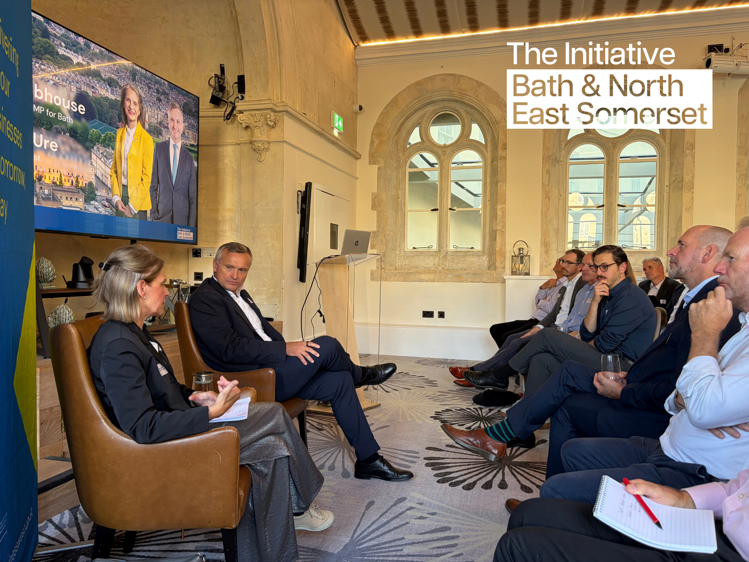

Members of the Bath & North East Somerset Initiative gathered in Bath for our latest Quarterly Members’ Event. Against a backdrop of persistent economic headwinds and shifting national policy, the region’s business leaders and civic changemakers came together to explore how local enterprise and government can work in partnership to generate sustainable regional growth.
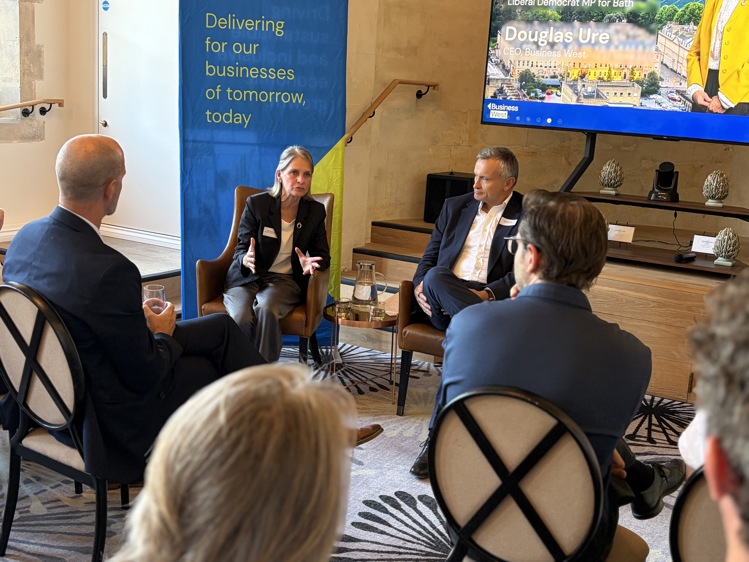
The afternoon featured a wide-ranging address from Wera Hobhouse, MP for Bath, as well as an update from Councillor Paul Roper. Following the address, Wera was joined by Business West CEO, Douglas Ure, for a candid conversation and Q&A.
Touching on everything from local authority budget constraints to national scale-up funding, energy security and regional devolution, the discussion ran long as members enjoyed an invaluable opportunity to engage meaningfully with their parliamentary representative.
Moving beyond tourism
Opening the discussion, Wera reflected on the compounding challenges facing local businesses over recent years, from post-Brexit trade friction and labour shortages to sharp increases in energy prices and supply chain inflation. While hospitality and heritage tourism remain the vital base of Bath's economy, Wera highlighted a growing need to broaden the region’s economic footprint toward higher-margin industries.
To build a more resilient local economy, she pointed to the vital importance of deepening strategic partnerships with Bath’s two universities and Bath College. By aligning academic research, vocational training, and local commercial needs, the region can cultivate high-value sectors such as engineering, green technology, creative digital, and professional services that will create high-wage career pathways that retain top talent in Bath.
Balancing council budgets and local development
Wera then invited Councillor Paul Roper, B&NES Council Cabinet Member for Economic Cultural and Sustainable Development to provide a transparent perspective from local government. Paul outlined the stark financial realities facing B&NES Council compounded by inflation and soaring statutory demands in adult and children’s social care. As a result of these challenges, the council is tasked with finding £28 million in capital savings over the next three years.
Despite these immense budget pressures, Paul emphasised that B&NES Council remains focused on acting as a proactive partner for commercial growth.
Key focus areas include the redevelopment of Bath Quays North to unlock prime commercial office space, as well as bringing forward a 34-acre site along the Bath-to-Somer Valley corridor to provide essential light industrial and expansion space for growing businesses.
Both Paul and Wera stressed the critical role of regional combined authorities in securing government infrastructure funding for local transport upgrades and housing development.
There is no “one-size-fits-all” solution
As the conversation turned to national policy, Wera addressed the specific structural hurdles preventing UK businesses from scaling. She cautioned against "one-size-fits-all" economic policies, noting that blanket national measures don't account for the distinctions between different industry sectors.
A central theme of the discussion was the missing framework for the type of "first-of-a-kind" commercial scale-up that Bath hopes to attract. While early-stage startups benefit from initial grants, expanding mid-sized firms in advanced manufacturing, green hydrogen and defence often struggle to access substantial scale-up capital, leaving innovative British technologies vulnerable to foreign acquisitions.
Wera also pointed to short two-year government procurement contracts as a major barrier to workforce planning and capital investment, urging Whitehall to adopt longer-term contracting horizons. Additionally, she advocated for targeted government support for micro- and small-business apprenticeships, noting that smaller firms require structural backing to mentor and train young people entering the workforce.
Government policy cannot be done on a one-size-fits-all basis. What local enterprise needs is tailored sector support, long-term policy continuity, and procurement contracts that give businesses the confidence to invest and scale.
In conversation with our members
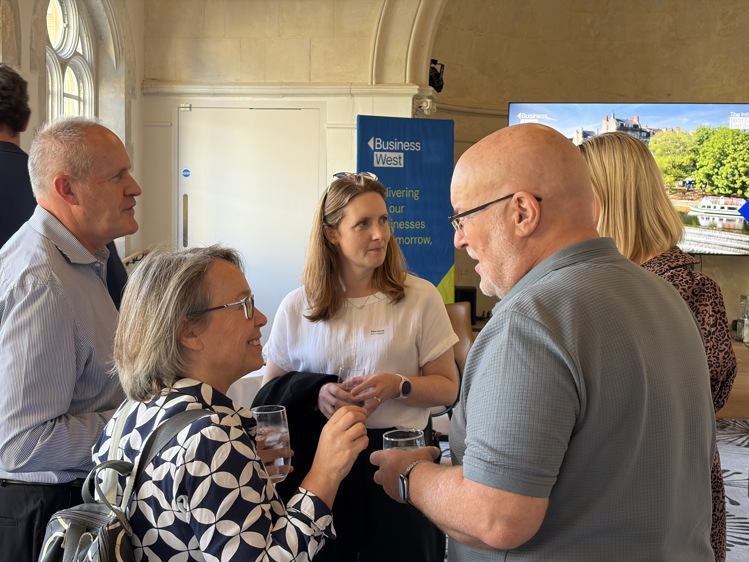
The event concluded with an interactive Q&A session, where B&NES Initiative members posed pressing operational and policy questions directly to Wera.
Members raised serious concerns regarding steep business rate revaluations and high commercial rents in Bath, which place disproportionate financial pressure on independent retail and hospitality traders. Wera described arbitrary official valuations as out-of-touch with local trading realities and pledged to raise rate reform in Parliament.
The discussion also tackled the wider structural challenges facing the district, including the acute need for affordable social housing and the long-term funding of social care. Everyone in attendance lamented how frequent ministerial turnover and political short-termism had hindered 10-to-20-year strategic planning. Be it energy independence, net-zero transitions or regional infrastructure, it was clear that everyone was hopeful for a return to stability and long-term strategic thinking in government.
Looking ahead for B&NES Initiative
The success of our Quarterly Members’ Events relies on the willingness of our business community to engage in constructive, forward-thinking dialogue with civic decisionmakers. By bringing our community to public policy debates, B&NES Initiative members play a crucial role in shaping the economic future of our region.
We encourage all members to keep a close eye on your inbox for details regarding our upcoming events.
If you are not yet a member but would like to participate in these vital discussions and help shape the future of Bath & North East Somerset, please get in touch with Dan Hooper, B&NES Initiative Membership Manager.