Member Spotlight: Andrew Wright, Deloitte
Occasionally we like to shine the spotlight on our members, and in this case one of the members of the Bristol Initiative. We sat down with Andrew Wright, Practice Senior Partner, Deloitte.

At Business West, we're proud to champion the businesses and organisations driving positive change across the South West. Through our Chamber Conversations series, we share the stories, expertise and insights of our members, highlighting the impact they're making in their industries and communities.
As part of World Environment Day this month and ahead of Net Zero Week next month, we're shining a spotlight on James Vincent from Green Shield Group, one of our Chamber members helping organisations reduce their carbon footprint, improve energy efficiency and make smarter, more sustainable business decisions.
As Regional Director for Green Shield Group, I talk to local businesses about their operation and how renewable technology can help reduce energy bills and boost green credentials. Typically, this is through regular networking events, engaging on LinkedIn, and marketing our offer through emails and other business events.
Keeping track of all these activities is crucial to being effective, and then I work with Head Office on design, pricing, proposals and present a compelling business case to the client.
I love hearing about different businesses across a variety of industries. For example, hospitality, education and social care are all high-energy-consuming sectors, but they operate very differently, so there's always lots to learn!
Green Shield Group is a leading provider of renewable energy technologies in the UK with a network of Regional Directors like myself. This enables a powerful combination of local knowledge, like flagship projects for the region, but also Head Office experience in dealing with large and very complex projects.
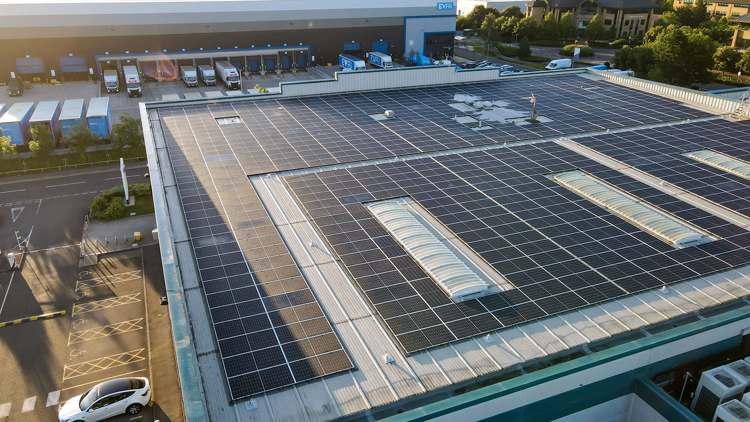
This is demonstrated by a huge solar project for Boeing at their training simulation centre near Gatwick, including one of the UK’s first ‘solar walls’, right through to smaller projects for businesses that want to both save money on energy consumption and be seen as sustainable.
Our energy audit offer analyses a client’s energy bills which, combined with a desktop survey of the site in question, allows recommendations to be presented that align with the client's objectives. Typically, this is to reduce energy bills or boost green credentials; ideally, a bit of both, and crucially, with results that are demonstrably measurable from switch-on.
I think sustainability has been pushed up the business agenda recently due to a combination of 'push and pull' factors, including legislative pressure and end-customer expectations, as well as global events beyond our control.
Government targets and compliance requirements, particularly around reporting, are designed to encourage visibility of metrics such as Scope 1, 2 and 3 emissions, while also promoting projects that benefit organisations and customers alike. For example, in Bristol, the Heat Main network currently under construction is leading the way in social benefit and green technology.
Customer expectations can influence purchasing decisions, whether in a business or consumer context. Hospitality is a visible example of this, where a variety of 'green accreditations' can be promoted as part of the proposition.
As with any movement, there are early adopters and those who wait for technology to become more established and, usually, more affordable. This is the shift we have seen recently, most visibly with electric vehicle uptake and the large solar farms that can be seen from the motorway.
Mass adoption is inevitable; however, the pace of change remains something of a question.
The first step is to understand the driving factors behind an organisation's decision when considering renewable energy technology. Those motivations could range from energy cost savings and supply chain pressure to legislative compliance or simply the desire to be perceived as taking sustainability seriously.
Energy data is not as complicated as it may seem and is usually accessible from your energy provider, either through familiar monthly bills or in a 'Half Hourly Data' (HHD) format. This raw data enables the analysis and modelling necessary to make technical recommendations.
Your site should be considered in terms of ownership, age and type of energy consumption. For example, a 24/7 manufacturing line will have very different requirements from a large hotel with a banquet kitchen, spa and rooms with variable occupancy. Desktop roof surveys are the first step, but on-site surveys are often the most revealing when it comes to identifying opportunities for improvement.
It is also important to think early about staff buy-in and engagement with a green approach. Top-down leadership can help influence team behaviours around commuting, recycling and participation in green initiatives. These can then be promoted externally to consumers to varying degrees, through schemes such as B Corp certification or sector-specific programmes like Sustainable Venues.
Membership of the local Chambers of Commerce, like Business West, is an important factor for Regional Directors across the UK. Therefore, I joined as part of my first year with Green Shield Group – even pre-empting my involvement with the Bristol Balloon Fiesta launch event last year! And I fully intend to renew my Business West Chamber membership in September.
The support from the monthly networking events has been great, as I stepped into entrepreneurship as well as a whole new product set to learn and evangelise.
Common challenges have been discussed, and my local network has grown substantially – fellow members have begun to recognise me as well!
The variety of additional events, like a recent behind-the-scenes member tour of Bristol Port at Avonmouth, reinforces how important facilities like this are for the promotion of Bristol as a key economic hub and part of my learning.
I anticipate working with the Local Skills Improvement Plans (LSIPs) team to promote the green agenda in the region, both to encourage young people into the sector and also to talk about my transition story.
The membership portal allows a profile to be built and promoted via the member directory. My first project came via being discovered on this site, and I am starting to go to wider events in Cheltenham and joint events with the Somerset Chamber as well. A fundamental part of my networking success.
I would absolutely recommend joining Business West, regardless of the size of your business, your sector or how long you’ve been operating!
Whether you’re a charity, SME, or multinational company, Business West Chambers of Commerce is here to help you connect, grow and thrive.
Find out more about the benefits of becoming a Chamber member, and if you are already a Chamber member and would like to be featured in a blog just like this one, then please get in touch with Amy.
Occasionally we like to shine the spotlight on our members, and in this case one of the members of the Bristol Initiative. We sat down with Andrew Wright, Practice Senior Partner, Deloitte.
As part of Alcohol Awareness Week (6th–12th July), we're featuring Alcoholics Anonymous as our Chamber Member of the Month, recognising the vital support they provide to individuals, families and communities affected by alcohol dependency, and their role in helping people build healthier futures.
Occasionally we like to shine the spotlight on our members, and in this case one of the members of the Bristol Initiative. We sat down with Katie Walker, CEO, Bristol and Weston Hospitals Charity.