
Growth support helps Viridysbio sniff out crop disease before it takes hold
Exeter-based Viridysbio is developing low-cost, disposable sensors that give growers an early warning when pests or disease are taking hold in their crops.

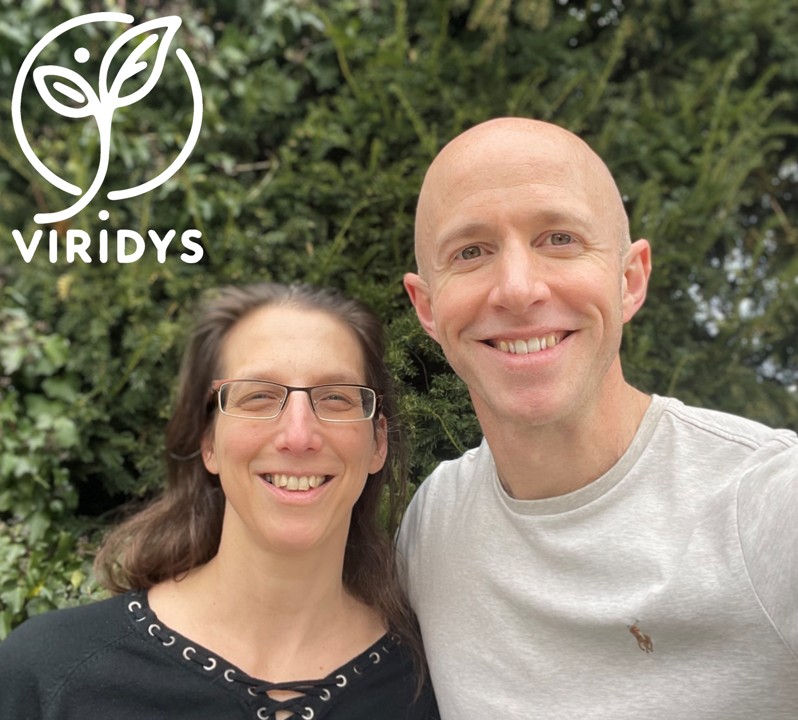
With tailored business growth support from Innovate UK Business Growth, delivered by Business West in the South West, the company has secured approximately £400,000 in grant funding, matched by a similar amount in private investment, to move its technology from early-stage research towards its first field-ready prototype.
From landmine detection to crop protection
Viridysbio's technology has its roots in an unlikely place. Co-founder Dr Rotem Berman had previously developed biological sensors to detect landmines. Viridysbio is adapting that same science for agriculture, developing low-cost, power-free, disposable sensors that can be deployed widely across a crop, rather than relying on expensive, centralised monitoring kit.
“It's a bit like sniffer dogs; they're trained to detect the smell of disease or hidden explosives long before you'd ever see a sign of it. We're doing the same thing, just with biosensors instead of noses.”
The company, founded less than two years ago, is focused initially on detecting biotic stress in glasshouse tomatoes, with a parallel opportunity in post-harvest produce monitoring also under exploration.
Grants that built the foundations
Viridysbio began working with Innovate UK Business Growth in the company's earliest stages, supported by Vince McConville, an Innovation and Growth Specialist. Vince has worked with the founders from initial orientation through to grant referrals, review support and partner introductions as the business has grown.
Vince flagged an RTO grant that funded Viridysbio's first volatile-profiling work, building the evidence base the company needed to make the case for a larger funding application. He also arranged an IP Audit, which gave the founders confidence that their approach was novel and clarified how to protect it ahead of filing their own patents.
A feasibility study that catalysed investment
That early groundwork fed into a successful application to the Farming Innovation Programme, a DEFRA-funded, Innovate UK-administered feasibility study focused on identifying biotic stress indicators in glasshouse tomatoes and developing Viridysbio's first prototype.
The grant is worth approximately £400,000, and the project is being delivered in partnership with the University of Exeter with support from UK tomato growers, a leading supermarket chain and the British Tomato Growers Association —representing around 95% of UK growers.
Alan McLeod, also an Innovation and Growth Specialist with a particular focus on grants, reviewed Viridysbio's application across two drafts.
“Alan was great. He cut through the fluff and got to the real core of the argument. Having that outside perspective on the application made a real difference.”
The grant award proved pivotal in another way too. With investors already circling, news of the successful application helped tip the balance, and Viridysbio closed a pre-seed round of approximately £400,000 within days, almost exactly matching the value of the grant.
“It's been a great story of public money unlocking private investment.”
Building the team for what's next
Since securing the grant, Viridysbio has progressed its technology from Technology Readiness Level (TRL) 3 to TRL 4, with a target of reaching TRL 6 by the end of the current feasibility study.
The company is in the process of making its first full-time hire, with a second expected to join within the next 12 months, doubling the size of the team, and with plans to take lab spacelocally.
Looking ahead, Viridysbio expects to have a tested glasshouse tomato prototype ready for operational trials within two years, alongside further development of its post-harvest application. First commercial revenue is not expected until around 2029, though paid pilots may be in place before then.
Stuart credits the support from Innovate UK Business Growth with adding real momentum to that journey.
“We'd probably have got there on our own eventually, but this support has more or less halved our development time. Having someone who knows what's out there, and can point you towards the right grant or the right person, has been invaluable.”