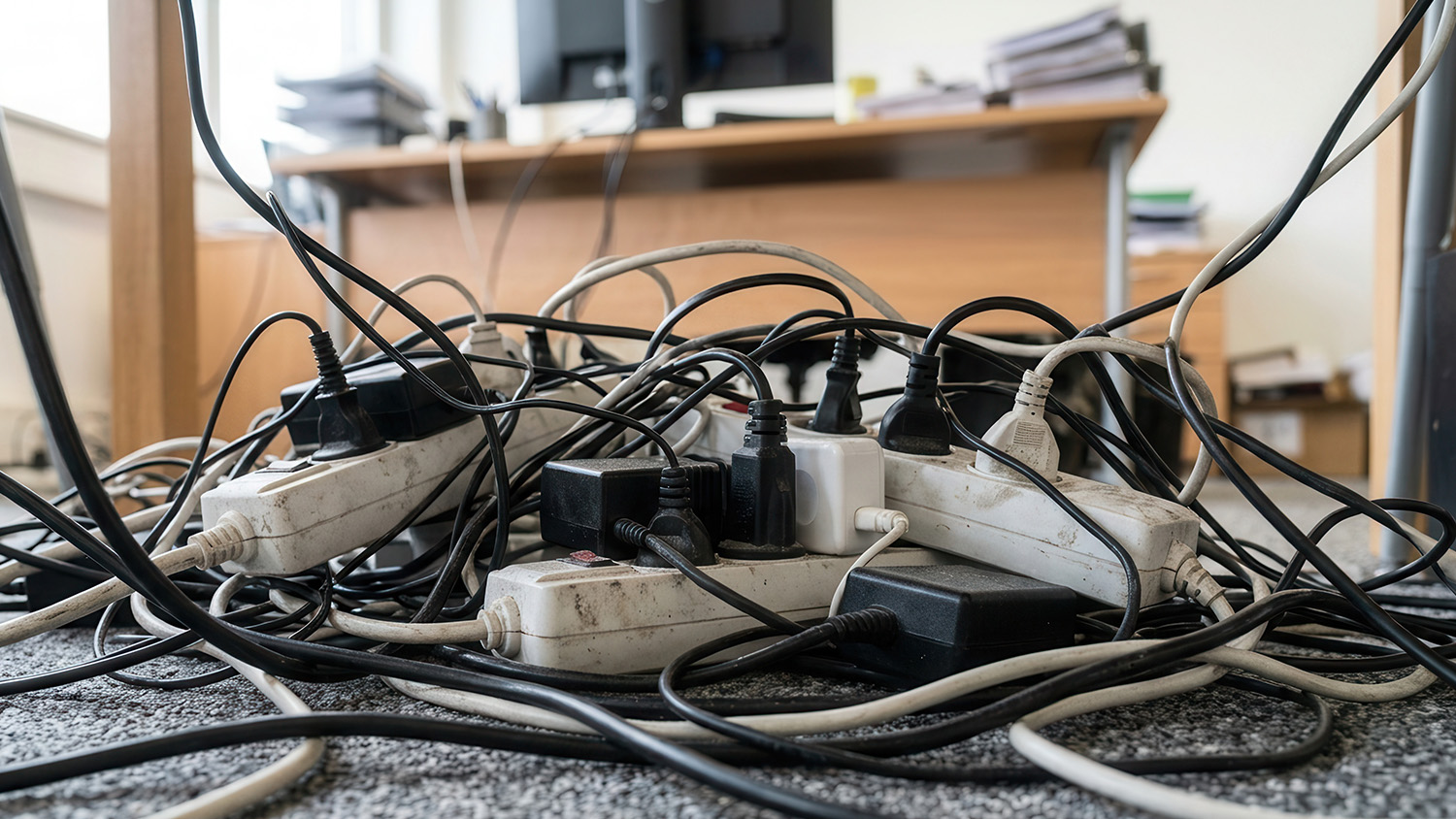
Energy has become harder for UK businesses to manage. In a June 2026 Censuswide survey, senior decision-makers responsible for energy, 74% said managing supplies and costs had become more complex over the past three years, and 48% said that complexity makes budgeting more difficult. Non-commodity charges, covering network costs, capacity charges and government levies, now make up around 60% of a typical business electricity bill, while expectations on carbon reporting keep rising. Tackling energy in the right order makes each step easier, and the six steps below set out that order.
Step 1: Find out when and where each site uses energy
Start with half-hourly meter data, which you can usually request from your supplier, or an energy audit where that data is patchy. Seeing when each site draws power, and what is running out of hours, shows where the savings sit before you spend anything. When a power outage prompted NHS Drayton Surgery to review its energy, correcting its metering and tariff cut its unit rate from 42p to 27p per kWh before any new equipment went in.
Step 2: Cut demand before adding anything new
Reducing what your sites use comes first, because every kilowatt-hour you avoid is one you never have to generate, store or buy. Most UK sites receive mains voltage at the upper end of the permitted range, and voltage optimisation brings it down to the level equipment is designed for, cutting consumption across the whole site in the background. The Westminster London, Curio Collection by Hilton, runs two voltage optimisers rated 575kVA and 720kVA. Together they cut the hotel’s annual demand by around 8% and paid for themselves in just over seven months. Combined with a 75.03kWp rooftop solar system, the project saved the hotel more than £175,000 in its first year. Efficient lighting, better controls and tighter out-of-hours routines lower demand further, so any solar or storage you add later can be sized to a smaller load.
3. Generating power on site
Solar PV delivers the best return when it is sized to the power your site uses in daylight hours. Every kilowatt-hour generated and used on site avoids the usage-linked charges on your bill, including wholesale costs, per-unit network charges and the Climate Change Levy. Boeing’s flight services facility in Crawley uses more than 3GWh of electricity a year. Its 453.56kWp roof and wall-mounted system generates 448,845kWh a year, all used on site, saving £100,527 in the first year with an estimated payback of 5.4 years. On constrained sites like Boeing’s, wall-mounted panels and add generating capacity once roof space runs out.
4. Choosing when to use energy
Shifting flexible loads away from peak-price periods and staggering equipment start-ups lowers costs with the equipment you already have. Battery storage holds daytime solar for later use when operating hours and generation don’t line up. Where the system is designed for backup, it can also keep critical equipment running during a power cut.
5. Planning for future demand
New demand from EV chargers or site expansion has to fit within your grid connection. Planning chargers alongside solar and storage, with load management to spread charging across the day, can avoid or reduce the cost of a connection upgrade and keeps your options open as the fleet grows.
6. Measuring progress and reporting it
Monitoring shows whether each measure is delivering what it promised, and gives you the figures boards, customers and investors increasingly ask for. Ennovi’s 818.09kWp rooftop system at its Arbroath manufacturing site is expected to generate around 630MWh a year. That supplies about 17% of the site’s electricity and saves 111.6 tonnes of CO2 annually, giving the sustainability programme Ennovi has run since 2019 measurable progress to track. Tracking consumption, generation and carbon against your starting point gives you a record you can report on with confidence.
Where should a business start?
The same research found that 45% of respondents want help with decarbonisation and 53% want more support managing energy risk. Each of the six steps is simpler when one plan covers them all, with one partner sizing solar, storage, voltage optimisation and EV charging around the same site data.
“Most businesses come to us wanting to start with solar. The ones that see the best returns start with their data, cut what they waste, and then size everything else around what’s left. Taken in that order, every pound goes further,” says Alex Palffy.
The best starting point is a conversation about your sites, your energy spend and what you want to achieve. That gives you a clear view of where the biggest savings sit, whether or not you go ahead.
Discuss your business energy at info@greenshield.group or call us on 01254 786 071. Vists us at www.greenshield.group.