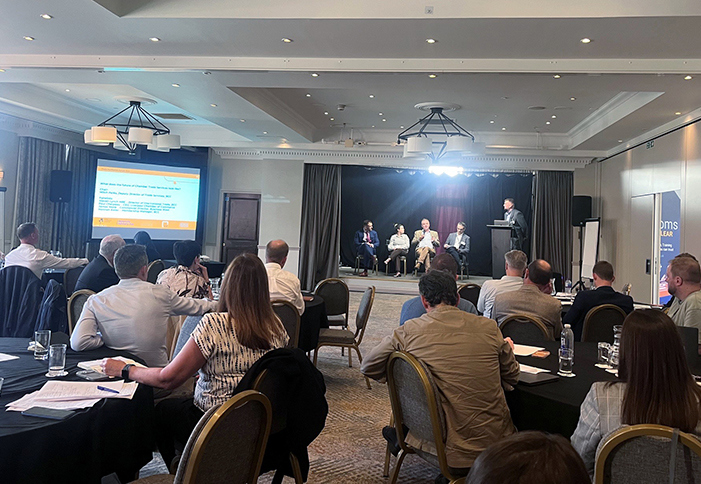
Every year, colleagues from across the British Chambers of Commerce (BCC) network come together for the Trade Facilitation Forum (TFF). The event gives them an opportunity to share expertise and ideas about the changing international trade landscape, the future of Chamber services and developments in customs documentation.
During the TFF 2026, James Monk, Beth Rice, Megan Childs, and Lucy Fletcher travelled to Liverpool for two days of discussion about what comes next for international trade services delivered by Chambers.
Our Commercial Director, James Monk, joined a panel exploring what the future of Chamber trade services could look like. Alongside Steve Lynch, BCC Director of International Trade, Paul Charpeau, CEO of Liverpool Chamber, and Hannah Keller, BCC Membership Manager, James discussed how Chambers can respond to the changing international trade landscape. The panel highlighted the need to offer businesses more in-depth support, make better use of the expertise already within Chamber teams and develop consultancy services in areas where government resources have reduced.
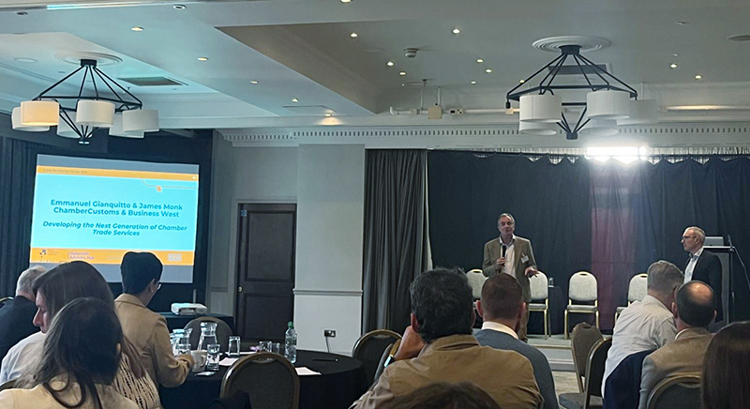
James Monk, Commercial Director, speaking at TFF 2026
Experts from the Department for Business, Innovation, Science and Trade (BIST) shared insights into how the origin of goods is determined and discussed the Comprehensive and Progressive Agreement for Trans-Pacific Partnership and the UK-India Free Trade Agreement. A key takeaway was that Chambers like Business West should help exporters make the most of these agreements while ensuring they understand the detailed rules and requirements that apply.
The Diplomatic Advisory Hub outlined the support available to exporters making decisions about entering new markets, including help to understand political and economic conditions. HMRC specialists also explained the UK Carbon Border Adjustment Mechanism, which comes into force in January 2027. Exporters of aluminium, cement, fertiliser, hydrogen, iron and steel will need to understand the measure, as will businesses that use these materials in their supply chains.
Preferential and non-preferential rules of origin were also a key part of the discussions. These rules determine where goods are considered to come from and can affect the duties, documentation and trade measures that apply. Exporters can draw on the expertise of their Chamber of Commerce to understand which rules apply and meet the relevant requirements.
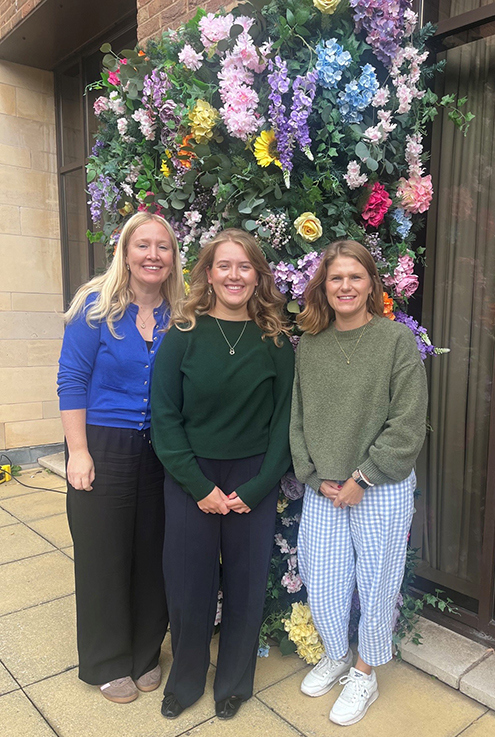
Lucy, Megan and Beth at TFF 2026
Government departments and the BCC help to shape and implement trade policy, while Chambers play an important role in explaining what those policies mean for individual businesses and products. As new measures and trade agreements change the way businesses trade internationally, Chamber consultancy and documentation services can help exporters understand the requirements and avoid unnecessary delays.
The Trade Facilitation Forum is about more than listening to presentations. For our Business West colleagues, it was also a valuable opportunity to build relationships and share knowledge with trade experts from across the UK Chamber network. These connections help Chambers give exporters more informed, well-rounded support when navigating international markets.
We are already looking forward to next year!