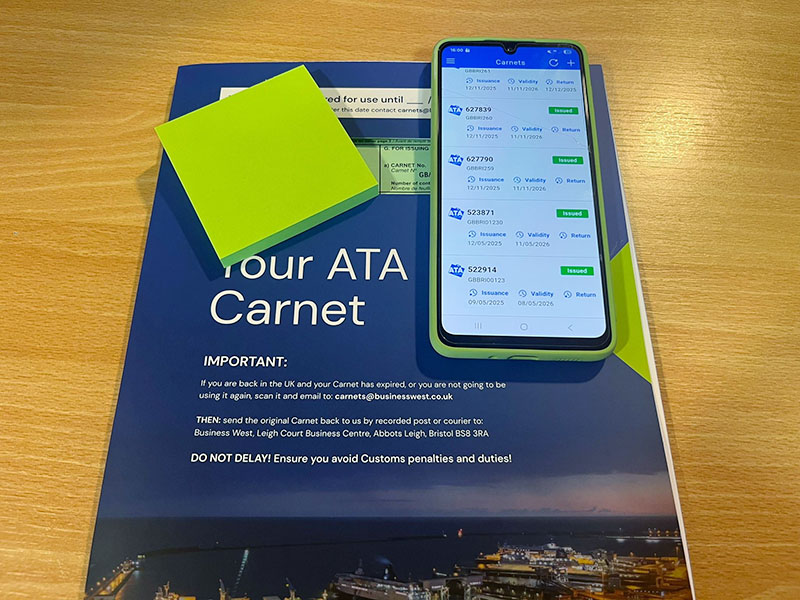
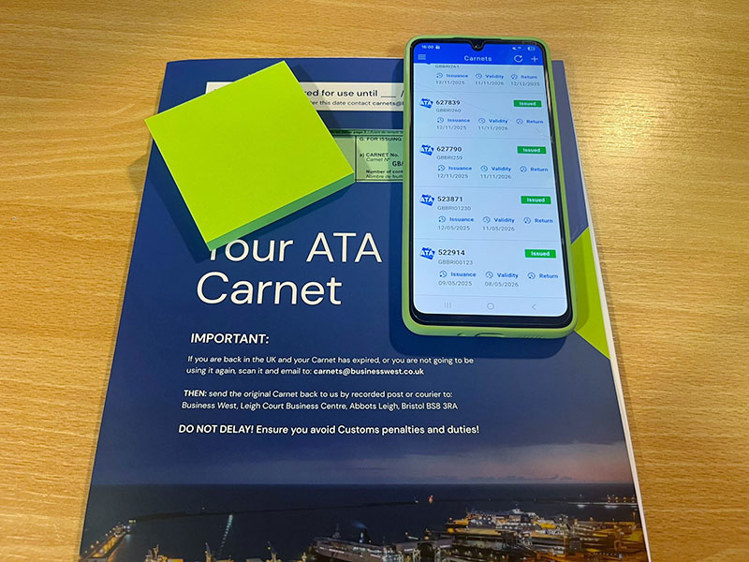
With around four weeks to go until Digital ATA Carnets launch on 1 June 2026, now is the time for businesses to get familiar with what’s changing - and what it means for your next international journey.
From 1 June, ATA Carnets for temporary exports to the UK, EU, Switzerland and Norway will move from paper to digital. Instead of presenting a physical document at customs, you will now use an app to show a QR code, which customs authorities will scan to process your goods.
What should you expect?
Digital Carnets are designed to simplify the process and reduce the risk of errors, but during the early stages, there will be a mix of digital and paper procedures depending on where you are travelling.
- If your itinerary includes only digital Carnet countries, your Carnet will be held entirely within the app.
- If your Carnet only includes countries that use paper based Carnets, then you will just have a paper Carnet.
- However, if your ATA Carnet is a combination of a digital Carnet and a paper Carnet, you will use both a digital and a paper Carnet. This is known as the parallel process, where you switch between formats depending on the country you are in.
What should you be doing now?
There are a few simple steps you can take to prepare:
Getting comfortable with the new system now will help ensure a smoother experience when you travel.
Where can you get help?
We understand this is a significant change for businesses using ATA Carnets, and our International Trade team is here to support you.
Whether you’re using a digital Carnet or navigating a mixed itinerary, we can guide you through the process and help you prepare with confidence.
If you have any questions or would like support ahead of your next journey, get in touch with our team.