An international tender can open the door to a valuable contract, a new market or a long-term commercial relationship. But preparing a competitive response can require significant time, expertise and money, often before there is any certainty of a return.
When the documentation is in another language, the first question shouldn’t necessarily be:
“How much will it cost to translate all of this?”
A better question may be:
“What level of translation support will help us assess this opportunity and respond effectively?”
That’s where we come in. Translating RFPs and contracts for high-value systems was one of our founding specialisms, so we understand the practical and commercial pressures involved – and how to provide the level of support each stage requires.
A managed alternative to DIY machine translation
You don’t have to upload a complex tender pack to a general-purpose machine translation tool, manage the files yourself or judge whether the resulting text can be trusted. Instead, the material stays within a professionally managed workflow grounded in the tender and RFP content, with its terminology, context and document relationships preserved. We check the output rather than trusting AI models blindly, escalating critical or ambiguous content for the appropriate level of human review – and we never use client material to train AI models.
Why tender packs are not AI-ready
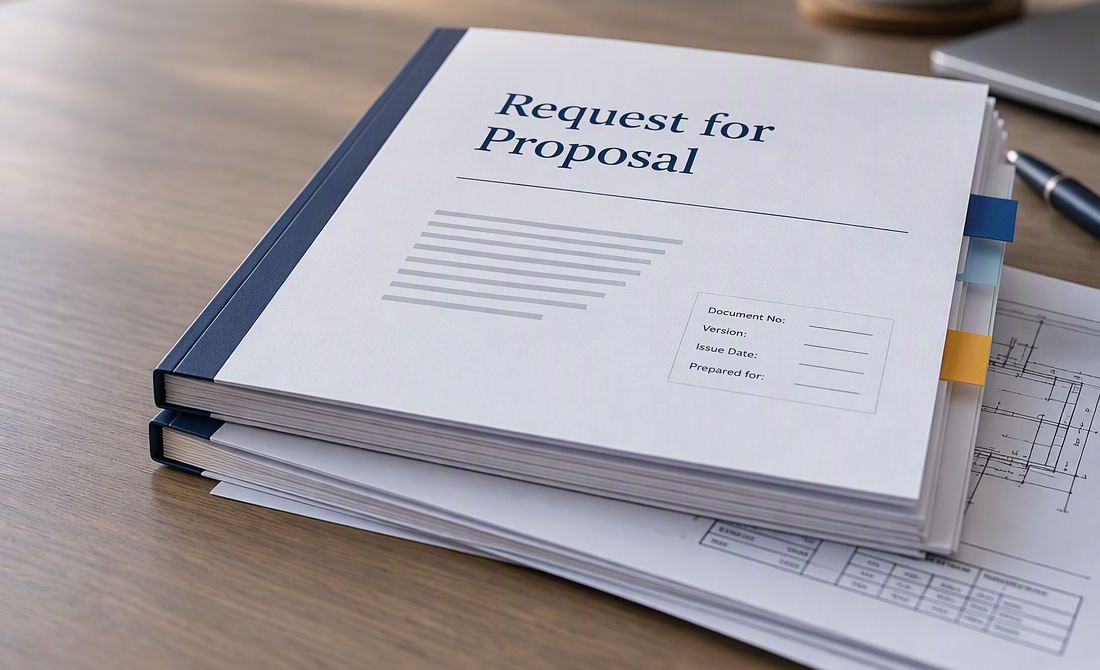
Tender packs are not always AI-ready. They can include scanned pages, complex tables, diagrams, forms and files in several formats, while important information may be spread across the main specification and multiple appendices.
By preserving structure and connections across the pack, the translated material is easier to navigate, compare and use in the initial assessment.
Match the service to the decision
The required balance of speed, cost and linguistic assurance depends on the opportunity, the decisions involved and the level of support you need – from initial evaluation through to a formal bid.
Initial guidance
The immediate objective is to understand the opportunity and identify any eligibility, compliance, commercial or contractual issues that could affect the decision to proceed.
Detailed assessment
Relevant sections are examined more closely so that commercial, technical or legal colleagues can evaluate the requirements and, where necessary, trace critical information back to the source material.
Bid and delivery
Critical material is professionally translated or reviewed to support the response, submission and, if successful, delivery of the contract. Terminology, context and source relationships established earlier are retained as requirements develop or revised tender documents arrive.
This avoids investing at the wrong level: either commissioning more translation than the immediate decision requires or relying on unchecked AI output where professional assurance is needed.
We begin by reviewing the tender pack, the decision or submission it needs to support, the deadline and the level of assurance required. We can then recommend an appropriate scope rather than defaulting to either raw machine translation or full professional translation of every document. The workflow is planned around your submission deadline and preserves the structure, formatting and document relationships your team needs to review, work with or submit the translated material.
Translation that fits the opportunity
A flexible service gives you the level of translation and review the opportunity requires – whether you need rapid initial understanding, detailed assessment or submission-ready content.
If you’ve identified an international tender, we can sign an NDA so you can share the documentation, deadline and intended use with us. We’ll then help you determine the appropriate translation scope, level of review and route forward.