Swindon Mindful Employer Network - November 2026
Welcoming mindful employers to join us for discussions around the topic of men's mental health in the workplace.
04 November 2026
09:30 GMT
The latest Swindon Mindful Employer Network event brought employers together to explore women's mental health and the menopause within the workplace.

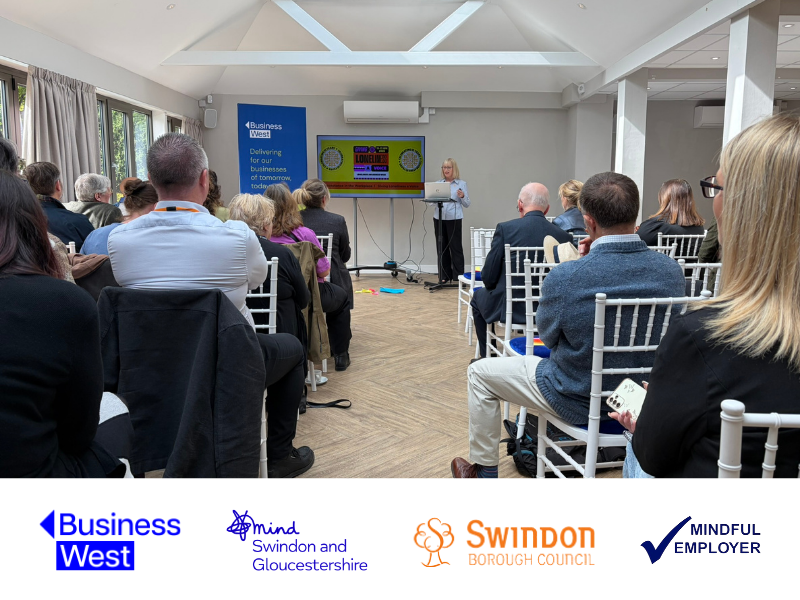
This week, we were pleased to welcome employers and businesses from across Swindon and the local area to the third Swindon Mindful Employer Network event of the year - a collaboration between Business West, Swindon Borough Council and Swindon and Gloucestershire Mind.
The session focused on women’s mental health in the workplace, exploring postnatal depression, menopause and the practical steps employers can take to create a more supportive and inclusive workplace culture.
The session opened with Sarah Morgan, HR Business Partner at Zurich, who shared her personal experience of postnatal depression and recovery.
Sarah spoke openly about experiencing severe postnatal depression following the birth of her second daughter, including the challenges she faced in accessing support and recognising that something was wrong.
Her story highlighted the importance of listening when someone says they are struggling, taking concerns seriously and creating an environment where people feel safe to speak up.
According to figures from NICE shared during the session, depression affects around 12% of women during pregnancy, while anxiety affects 13%. In the first year after birth, around 15 to 20% experience depression and/or anxiety.
Postnatal depression can affect mood, self-worth, sleep, concentration, anxiety and the ability to bond with a baby. It can also involve feelings of being unable to cope or, in more serious cases, thoughts of harming yourself or your baby.
Sharing mental health stories matters because it raises awareness, increases understanding and reduces stigma.
Sarah also spoke about her recovery and the importance of continuing to look after her mental health. Following her experience, she set up Shine, a community group supporting mums experiencing postnatal depression, and has contributed to maternity mental health working groups.
Her story showed that recovery is possible, while also highlighting how important early intervention and being able to speak up can be.
Hazel Hayden, founder of Bristol Menopause Clinic, then explored menopause in the workplace and why employers should see it as a workforce issue as well as a health issue.
More than six million women aged 40 to 60 are currently employed in the UK, with most expected to go through menopause while working.
The statistics shared during the session demonstrate the potential impact on both employees and businesses:
• 67% say menopause symptoms have had a mostly negative effect on them at work.
• 53% have taken sick leave or been unable to go into work because of their symptoms.
• 1 in 6 have considered leaving their job due to a lack of support.
• Only 24% of organisations have a stated menopause policy in place.
• 27% say their career progression has suffered as a result.
Small, consistent adjustments make the biggest difference, and most cost little to implement.
Hazel highlighted that menopause involves much more than hot flushes. Symptoms can include sleep disturbance, fatigue, joint pain, brain fog, memory lapses, difficulty concentrating, anxiety, low mood and changes in confidence.
For employers, this means recognising when someone who is normally confident and capable may suddenly be struggling, and having the knowledge and culture in place to start a supportive conversation.
The session explored a number of practical, low-cost ways businesses can support employees experiencing menopause.
These included:
• Introducing a clear, written menopause policy and action plan.
• Training managers so they feel confident having supportive conversations.
• Appointing trained menopause champions.
• Offering practical adjustments such as flexible working, temperature control or uniform changes where appropriate.
• Providing a clear pathway to clinical or specialist support.
Hazel also highlighted the importance of moving beyond simply raising awareness. Bringing someone into the workplace to deliver a one-off menopause talk can be useful, but lasting change comes from embedding support into workplace culture and ensuring employees know where to turn when they need help.
The presentation also highlighted the opportunity for employers to get ahead of forthcoming legal expectations around menopause support, rather than waiting until changes become mandatory.
The facilitated Q&A, led by Lynette Buebird from Swindon & Gloucestershire Mind, brought the two topics together.
A key theme was the importance of making conversations about women’s mental health feel normal and accessible, including for men working in male-dominated industries.
Managers were encouraged to create an environment where people know that support is available before a difficult conversation needs to happen. Simple questions such as “How are you?” can provide an opening, while listening without judgement is just as important as knowing what advice to give.
The discussion also touched on the importance of supporting partners and colleagues, with attendees exploring how workplaces can help men better understand issues such as postnatal depression and menopause.
“We have one mouth and two ears; listen without judgement.”
The group also discussed the value of lived experience in workplace sessions. Hearing directly from someone who has experienced a mental health challenge can help reduce stigma, encourage others to speak up and make conversations feel more relatable.
• Listen and take people seriously: If someone says they are struggling, create space to hear what they are experiencing without minimising their feelings.
• Build support before it is needed: Clear policies, trained managers and signposting can make it easier to respond when someone needs help.
• Look beyond the obvious: Mental health and menopause can affect confidence, concentration, sleep, relationships and performance in ways that may not always be immediately visible.
• Small adjustments can have a big impact: Flexible working and practical workplace changes can help people remain in work and feel supported.
• Everyone has a role to play: Creating a supportive culture around women’s mental health is not just an HR responsibility. Managers, colleagues and senior leaders all have a part to play.
The presentation slides from this event are available to download for those who missed the session or would like to revisit the advice and statistics shared.
During the Q&A, attendees were also signposted to a number of organisations and resources, including: